COP15 dealing with global warming is taking place in Denmark. There are two aspects to the problem. First, what is actually happening and, secondly, what should our response be. Whatever the cause of global warming, our response will primarily be an economic and political solution and perhaps we should consider the difference between economics and politics and how they might work together. In ancient times economics dealt with "rule of the home" while politics concerned itself with management of the city-state. There is still this division today in the separation of microeconomics and macroeconomics. The first deals with local problems while the latter deals with more general problems. The difficulty that we are having with global warming might be that the two approaches are out of balance.
In nature one finds a similar division between Special Relativity and General Relativity. Special Relativity is local while General Relativity deals with weaker but more "global" forces that ultimately dominate. These are the Commons and Lords of Nature.
We can probably do something similar with economics and global warming and try to get the two systems to work together better. The question is, "Are we up to the task?"
Tuesday, December 8, 2009

Sunday, December 6, 2009
Beyond Relativity
The weakest assumption in the derivation of the Lorentz Transformation is Einstein's assumption that the speed of light is a universal constant. This assumption is validated by the null result of Michelson-Morley experiment. The conclusion that there is no ether may not be justified. The validity of the Lorentz Transformation suggests that the observed change to the speed of light for a given relative velocity is neglible. If this were not so naive impressionism suggests that one can still find a transformation between the two reference frames which is similar to the Lorentz Transformation. An expression for A can be found by plugging the two values for the speed of light into the formula for the addition of velocities and solving for A. One then gets the following results where Δc is the change in the observed value of the speed of light,


Friday, December 4, 2009
Relativity and Naive Impressionism
How can we justify the assumption of symmetry used in the derivation of the Lorentz Transformation? It appears to be a form of naive impressionism or the belief that what is true for one is true for all. But it appears to fit the facts. The Michelson-Morley experiment gave a null result on the measurement for the velocity of the ether. The speed of light appears to be independent of the Earth's motion throughout the year at least for the value of the Earth's orbital velocity. Relativity has proven to be a useful tool for scientific research. But it seems to validate the simplistic worldview and the possibility of making a false assumption.
One could view Ockham's razor as a form of naive impressionism. But it is an economy measure. One has to seek a balance between ignoring the lack of evidence to the contrary and unnecessarily complicating an explanation of the facts. Making unjustified assumptions raises doubts.
The operational rule of the scientific community appears to be naive impressionism with doubts. So we are justified in saying, "Don't trust them." As a matter of expediency, however, this may be the best way of proceeding, but under the circumstances one needs to show that the use of Relativity is justified in a particular case and that the results are reasonable. The assumptions break down if there is an asymmetry in the point of view of the observers. This may be the explanation of the imaginary values in the transformation for velocities exceeding the speed of light. Strong gravitation may bias the transformation and Einstein attempted to address this in the General Theory of Relativity. Special Relativity may still be the best first approximation to the laws of the Universe.
One could view Ockham's razor as a form of naive impressionism. But it is an economy measure. One has to seek a balance between ignoring the lack of evidence to the contrary and unnecessarily complicating an explanation of the facts. Making unjustified assumptions raises doubts.
The operational rule of the scientific community appears to be naive impressionism with doubts. So we are justified in saying, "Don't trust them." As a matter of expediency, however, this may be the best way of proceeding, but under the circumstances one needs to show that the use of Relativity is justified in a particular case and that the results are reasonable. The assumptions break down if there is an asymmetry in the point of view of the observers. This may be the explanation of the imaginary values in the transformation for velocities exceeding the speed of light. Strong gravitation may bias the transformation and Einstein attempted to address this in the General Theory of Relativity. Special Relativity may still be the best first approximation to the laws of the Universe.
Thursday, December 3, 2009
Special Relativity & the Lorentz Transformation
In Special Relativity the Lorentz Transformation allows one to convert measurements such as distances and times made in one frame of reference to those of another. It is easiest to derive the transformation when the situation is symmetric, i.e., changing between the two frames of reference doesn't alter any of the parameters involved. The same transformation can then be used for both reference frames. Consider two spacecraft headed directly towards each other with a relative velocity of v. We can use unprimed variables for measurements made by the first spacecraft and primed variables for the second. In both cases the transformation is L.

The transformation is assumed to be linear and can be represented by four components of a matrix which only depend on the relative velocity.

By noting that a point in the second spacecraft doesn't move relative to itself while it appears to be moving with velocity -v to the first spacecraft, we can deduce B. The method can be generalized to find the any velocity, V', as it appears to the second spacecraft if its value for the first spacecraft, V, is known. This is the formula for the addition of velocities.

With L the same for both reference frames we can use it twice to make a transformation from the first to the second spacecraft and then back again to the first. Since we should get the original values back the result is the identity matrix. Doing the multiplications and equating terms gives two more terms of the transformation leaving only one unknown, A.

This is as far as symmetry will take us. To go further Einstein had to assume that the speed of light was a universal constant. This is not unreasonable if space is homogeneous. We just have to be careful about directions though. A ray of light moving along the common line of the spacecraft will appear to be moving in different directions to the two observers. Let's say that it moves away from the first and towards the second. This allows us to simplify the expression for C and determine an expression for A.

We then have to use the minus sign so that the direction of time will be the same in both frames of motion.
 So we have found the transformation in this particular case. We can use other transformations to convert to situations that are less symmetrical.

This derivation indicates that Relativity doesn't impose any constraints on time travel. There are transformations which will convert positive changes in time to negative ones. But at the same time they will also convert positive energies into negative ones. So it seems likely that if one could travel back in time one would find oneself in an antimatter universe which would be extremely hazardous.

The transformation is assumed to be linear and can be represented by four components of a matrix which only depend on the relative velocity.

By noting that a point in the second spacecraft doesn't move relative to itself while it appears to be moving with velocity -v to the first spacecraft, we can deduce B. The method can be generalized to find the any velocity, V', as it appears to the second spacecraft if its value for the first spacecraft, V, is known. This is the formula for the addition of velocities.

With L the same for both reference frames we can use it twice to make a transformation from the first to the second spacecraft and then back again to the first. Since we should get the original values back the result is the identity matrix. Doing the multiplications and equating terms gives two more terms of the transformation leaving only one unknown, A.

This is as far as symmetry will take us. To go further Einstein had to assume that the speed of light was a universal constant. This is not unreasonable if space is homogeneous. We just have to be careful about directions though. A ray of light moving along the common line of the spacecraft will appear to be moving in different directions to the two observers. Let's say that it moves away from the first and towards the second. This allows us to simplify the expression for C and determine an expression for A.

We then have to use the minus sign so that the direction of time will be the same in both frames of motion.
 So we have found the transformation in this particular case. We can use other transformations to convert to situations that are less symmetrical.
This derivation indicates that Relativity doesn't impose any constraints on time travel. There are transformations which will convert positive changes in time to negative ones. But at the same time they will also convert positive energies into negative ones. So it seems likely that if one could travel back in time one would find oneself in an antimatter universe which would be extremely hazardous.
Saturday, October 24, 2009
Timeline of the Julian calendar reforms
239 BC Ptolemy III issues the Decree of Canopus
63 BC Caesar elected Pontifex Maximus
49 BC Civil War
48 BC Caesar meets Cleopatra
46 BC Forum of Caesar
46 BC Julian calendar
44 BC Assassination of Julius Caesar
42 BC Apotheosis of Julius Caesar
30 BC Cleopatra's death
26 BC Alexandrian calendar
After examining this timeline one has to ask if the Julian calendar reforms were incomplete due to the assassination of Julius Caesar?
63 BC Caesar elected Pontifex Maximus
49 BC Civil War
48 BC Caesar meets Cleopatra
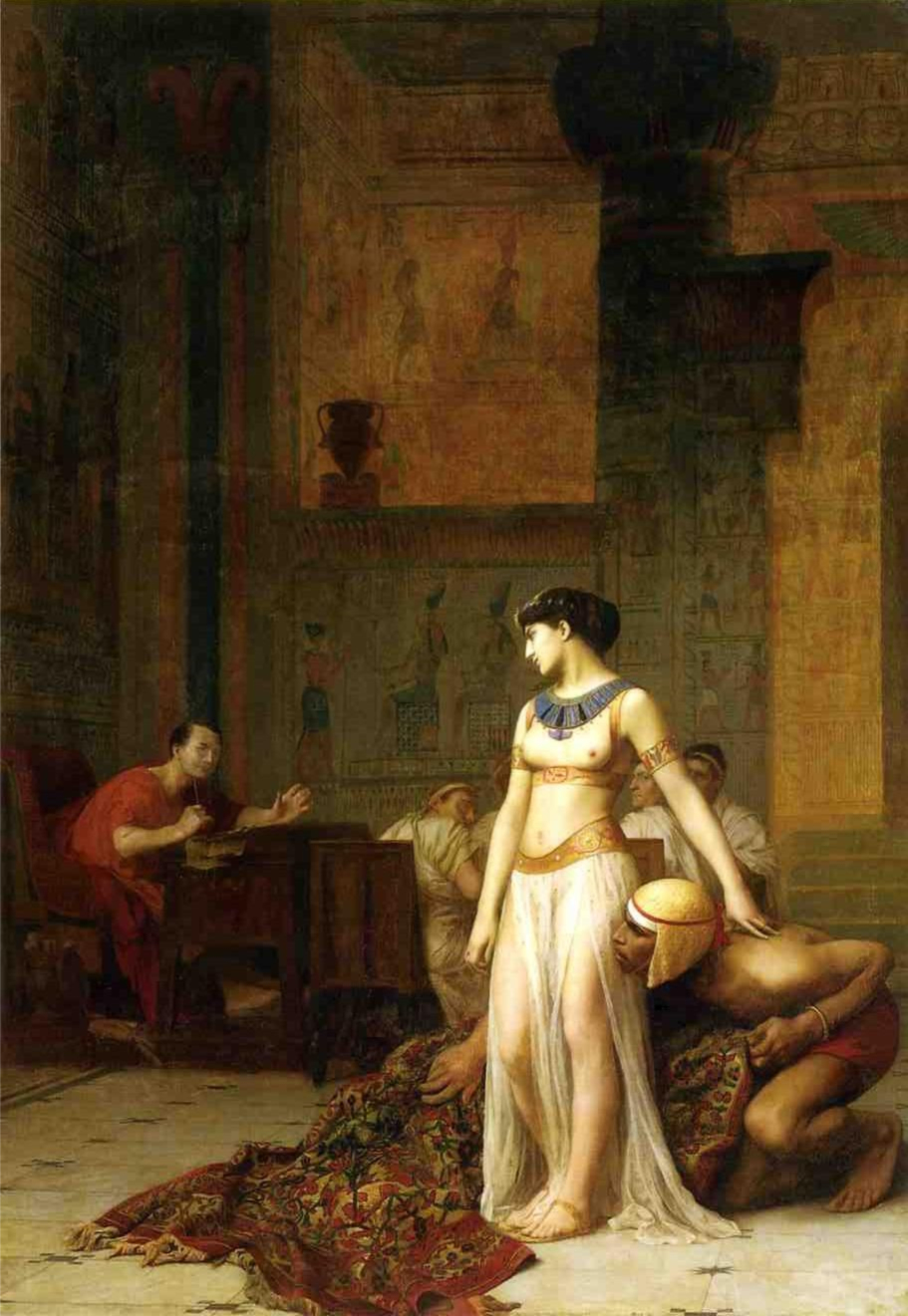
46 BC Forum of Caesar
46 BC Julian calendar
44 BC Assassination of Julius Caesar
42 BC Apotheosis of Julius Caesar

30 BC Cleopatra's death

26 BC Alexandrian calendar
After examining this timeline one has to ask if the Julian calendar reforms were incomplete due to the assassination of Julius Caesar?
Thursday, October 22, 2009
Are the number of days per month rational?
During the last week I have been studying the computation of the Julian Day Number that astronomers use to keep track of time. To do this one needs to know how to convert from month and day to day of year. The number of days in a month is quite irregular and one wonders how this came about. Most of the features of our present calendar are due to the reforms of Julius Caesar in 46 BC. Caesar turned to an Egyptian astronomer, Sosigenes of Alexandria, for assistance in correcting the errors in the Roman calendar at that time. The lengths of the months and leap day date from that time. At first the length of the months seem quite arbitrary but if one considers the period from March to the following February the pattern if more regular. Placing the leap day at the end of this period is consistent with December being the "10th month."
 The problem of designing a calendar with twelve month and 365 days is how to distribute the odd 5 days. The pattern seems to be consistent with using multiples of 30 7/12 rather than the more obvious 30 5/12 as seen in the calculation below. An irregularity is that the sequence is shifted by one month.
 In order to do this one needs to be able to perform integer division and this can be done quite easily using multiplication tables and Sosigenes would have been quite capable of doing this. This gives us the sums of the days of the months. The formula for computing the sums turns out to be rather simple and allows us to derive a formula for January through December counting January as the first month. This simplifies converting month and day to day of year with the inclusion of a leap day in leap years.

 The problem of designing a calendar with twelve month and 365 days is how to distribute the odd 5 days. The pattern seems to be consistent with using multiples of 30 7/12 rather than the more obvious 30 5/12 as seen in the calculation below. An irregularity is that the sequence is shifted by one month.
 In order to do this one needs to be able to perform integer division and this can be done quite easily using multiplication tables and Sosigenes would have been quite capable of doing this. This gives us the sums of the days of the months. The formula for computing the sums turns out to be rather simple and allows us to derive a formula for January through December counting January as the first month. This simplifies converting month and day to day of year with the inclusion of a leap day in leap years.
Sunday, October 4, 2009
Space Elevator Thermal Cycling
As a diversion from ancient history we might look to the future for a change.
A space elevator is a mechanism which claims to provide easy access to space. It is basically a cable with a counterweight that rotates with the Earth as it turns about its axis. The cable is heated by sunlight which varies as the elevator rotates. So there will be daily variations in the temperature of the cable also know as thermal cycling. Why study themperature variations? Most materials expand as they are heated and since the space elevator extends beyond geosynchronous orbit, 36,000 km above the Earth's surface, the change in length can be considerable.
It has been suggested that carbon nanotubes might be strong enough to create a cable that is self supporting. The carbon nanotubes are similar in structure chemically to graphite. Since the planes of carbon atoms form tubes, we would expect the density of a cable to be less than that of graphite. But one would expect the thermal properties per unit mass to be about the same.
So to approximate the thermal properties of a cable, we will assume it is made of graphite and behaves like a black body. The following calculation shows the daily temperature variation of the cable as it rotates about the Earth at the time of the equinoxes when the Sun is above the Equator. The cable absorbs energy from the sunlight which strikes it and radiates heat at a rate depending on its temperature. The method is similar to that used for simple climate models of the Earth.
The images below are a slightly condensed version of the program used to do the calculations. A simplifying assumption was that a section of the cable had a uniform temperature throughout. (For a better view of the images double click on them.)


The calculations above indicate the daily changes at the time of the equnoxes. There are two minimums because when the cable aligns with the direction of the Sun it is essentially in its own shadow and only experiences cooling. The shifts in times of the minimum and maximum temperatures for thicker cables can be attributed to thermal inertia.
The daily variations for different times of the year have to take into consideration changes in the angle of the Sun relative to the Equator. There is surprisingly little change though in the thermal cycles throughout the year. The reason is that the projection of sunlight onto the surface of the cable doesn't change that much. It is on the order of 10% as can be seen from the necessary change below. ι_S is the inclination of the rotational axis of the Earth, 23.5°. The first formula gives the declination of the Sun in terms of the angle φ which is the angle of the Sun in the ecliptic plane. θ is the angle of the cable relative to the Sun in the plane of cable's rotation.

A space elevator is a mechanism which claims to provide easy access to space. It is basically a cable with a counterweight that rotates with the Earth as it turns about its axis. The cable is heated by sunlight which varies as the elevator rotates. So there will be daily variations in the temperature of the cable also know as thermal cycling. Why study themperature variations? Most materials expand as they are heated and since the space elevator extends beyond geosynchronous orbit, 36,000 km above the Earth's surface, the change in length can be considerable.
It has been suggested that carbon nanotubes might be strong enough to create a cable that is self supporting. The carbon nanotubes are similar in structure chemically to graphite. Since the planes of carbon atoms form tubes, we would expect the density of a cable to be less than that of graphite. But one would expect the thermal properties per unit mass to be about the same.
So to approximate the thermal properties of a cable, we will assume it is made of graphite and behaves like a black body. The following calculation shows the daily temperature variation of the cable as it rotates about the Earth at the time of the equinoxes when the Sun is above the Equator. The cable absorbs energy from the sunlight which strikes it and radiates heat at a rate depending on its temperature. The method is similar to that used for simple climate models of the Earth.
The images below are a slightly condensed version of the program used to do the calculations. A simplifying assumption was that a section of the cable had a uniform temperature throughout. (For a better view of the images double click on them.)


The calculations above indicate the daily changes at the time of the equnoxes. There are two minimums because when the cable aligns with the direction of the Sun it is essentially in its own shadow and only experiences cooling. The shifts in times of the minimum and maximum temperatures for thicker cables can be attributed to thermal inertia.
The daily variations for different times of the year have to take into consideration changes in the angle of the Sun relative to the Equator. There is surprisingly little change though in the thermal cycles throughout the year. The reason is that the projection of sunlight onto the surface of the cable doesn't change that much. It is on the order of 10% as can be seen from the necessary change below. ι_S is the inclination of the rotational axis of the Earth, 23.5°. The first formula gives the declination of the Sun in terms of the angle φ which is the angle of the Sun in the ecliptic plane. θ is the angle of the cable relative to the Sun in the plane of cable's rotation.

Subscribe to:
Posts (Atom)